Render respray and colour changes in Mansfield
Render respray and colour changes in Mansfield
A colour coating can refresh a suitable existing render without replacing the whole finish. The decision depends on what is already on the wall and whether it remains sound. Before choosing a shade or application method, separate cleaning, repairs, preparation and coating in the proposal so you can see which work is actually included.

On this page
Establish what the existing surface can support
Identify the render and any later paint or coating as far as the available records and inspection allow. A bare mineral finish, a previously painted wall and a silicone-textured surface may need different treatment. The proposed coating must be compatible with the actual substrate. A product described as exterior paint is not automatically suitable for every rendered wall.
Look for loose material, chalking, cracks and signs of repeated wetting. Record the extent and position rather than judging the wall only from a distant photograph. Where adhesion checks or trial preparation are appropriate, agree how the result will be reviewed. A successful test in one dry corner does not establish the condition of an elevation with several different previous repairs.
If the existing finish is extensively detached or unsuitable, a colour coating may not be the right scope. Wall rendering covers replacement of the underlying finish, while render repair addresses defined defects that can be dealt with locally. Compare those routes on their own terms. A coating quotation should not appear attractive by omitting a defect that prevents the system from performing as specified.
| Stage | Required description |
|---|---|
| Assessment | Existing finish, condition and compatibility |
| Cleaning | Method, protection and drying checks |
| Repair | Defects treated and material selected |
| Sample | Dry colour and texture approval |
| Application | Product, method and weather constraints |
- Clean Washed down, with algae and mould treated and left to work.
- Repair first Cracks and hollow patches are repaired before any coating.
- Prime or stabilise Where the coating maker requires it on that surface.
- Coating Usually two coats of a breathable masonry or silicone coating.
The usual order of work. The survey and the chosen products decide the actual steps.
Clean for the substrate and the proposed coating
Cleaning should remove the relevant contamination without unnecessarily damaging the surface. The method needs to suit both the existing finish and the coating manufacturer's preparation requirements. Increasing pressure until a stain disappears can erode texture or force water into vulnerable details. Ask what method is proposed, how adjacent surfaces are protected and how the wall will be assessed afterwards.
Surface growth and stains need consideration of their cause. A leaking gutter, concentrated runoff or persistent wetting may need correction alongside cleaning. Applying a new colour over the symptom does not repair the fitting responsible for it. Record which associated repairs are included and which another trade must complete before the coating stage.
Drying and readiness should follow the selected product guidance and actual conditions. A programme that allows cleaning and coating in immediate succession may not suit every wall or weather situation. Ask who checks the surface and what happens if it remains unsuitable on the planned day. The application date should follow readiness, rather than readiness being assumed to fit the diary.
Make repairs part of the coating specification
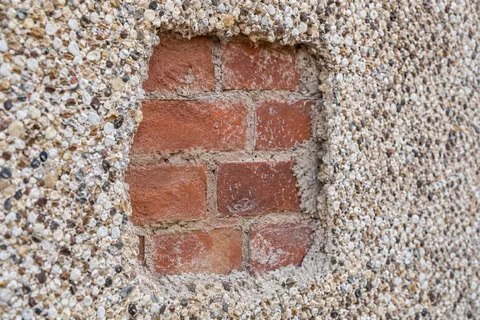
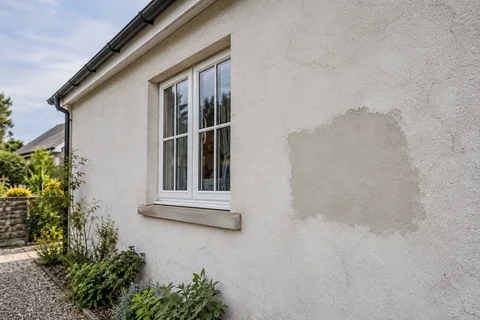
Cracks, failed patches and damaged edges need appropriate treatment before colour work. The preparation should explain the repair material and how it will be made compatible with the surrounding surface. A repair that is visibly smoother or coarser may remain apparent through the new coating. If appearance matters on a prominent frontage, include a trial showing both the repair and its finished colour.
Where movement or moisture is unresolved, the repair requires further assessment. Do not accept an assurance that a flexible-sounding paint will deal with every crack. The wall may need a designed joint or correction to a defective detail. The coating should be the final decorative stage after that work, rather than a way of postponing it.
Traditional lime-rendered walls need particular care in choosing a finish. Lime rendering is specified partly for compatibility with the building and moisture behaviour. An unrelated coating can change that behaviour. Use advice appropriate to the existing materials and record the proposed finish explicitly. The same discipline applies to an insulated render system, whose manufacturer may have specific repair and recoating guidance.
Approve colour at a realistic scale
Place a representative sample on the intended elevation or a suitable sample panel prepared to match it. View the dry result beside the roof, frames and retained brick, and in more than one light condition. A shade that appears subdued on a screen can look much brighter across a complete wall. Keep the product and colour reference with the approval rather than relying on a name such as warm white.
If several elevations have different textures or prior coatings, ask whether one sample represents them all. The finished colour may be consistent while the underlying texture remains visible. A coating is not usually a method of levelling a rough wall into a perfectly flat one. If a different texture is wanted, compare the scope with a new silicone rendering or other supported finish system.
Discuss the limits of future touch-ups. Weathering and application can make a small later patch visible even with the original colour reference. Retain the batch and product information supplied at handover, and establish a sensible panel boundary for any future repainting. The aim is an informed appearance decision, not a promise that every later alteration will disappear.
Choose application and protection together
Spraying, brushing and rolling are application methods, not separate guarantees of quality. The appropriate method depends on the product, surface and site constraints. A spray proposal needs a credible plan for adjacent windows, vehicles, planting and neighbouring property. Ask how weather and wind conditions affect the operation and how masking will be checked before application begins.
Occupied commercial premises may need phased work around entrances and deliveries. Commercial rendering guidance covers those coordination issues, which still apply when the task is a coating rather than replacement render. For a home, agree access to doors and protection for outdoor belongings. Keep the work sequence realistic about the time needed for preparation and removal of masking.
Inspect the finished surface and the protected surroundings at completion. Check edges, retained fixtures and any repairs included in the scope, then keep the cleaning and care instructions. If staining returns, investigate its source before simply repeating the coating. The project record should make clear what was cleaned, what was repaired and which coating was applied to each elevation.
Common questions
Will coating remove all differences between old patches?
A coating can change colour while leaving texture and profile differences visible. Assess a sample containing a representative repair if that distinction matters. If the desired result requires a different surface texture, compare a supported replacement or finishing system rather than expecting a colour treatment to perform an unspecified levelling job.
See housing and planning information for Mansfield and nearby places, including the source and geography behind each figure.